
Table of Contents
Introduction
College is an exciting time filled with new opportunities, challenges, and responsibilities. Whether you want to improve your grades, build new skills, manage your finances, or prepare for your career, setting clear goals can help you stay focused and motivated.
One of the most effective goal-setting methods is the SMART framework. Instead of creating vague goals, SMART goals help you define exactly what you want to achieve and how you’ll measure your progress.
In this guide, you’ll explore SMART goals examples for students in college, understand what SMART goals are, learn why they are important, and discover practical examples that you can apply to your academic, personal, financial, and career life.
What Are SMART Goals?
SMART goals are goals that follow a structured framework to make them clear, realistic, and easier to achieve. Instead of saying, “I want to do better in college,” a SMART goal explains exactly what you want to accomplish, how you’ll measure success, and when you plan to achieve it.
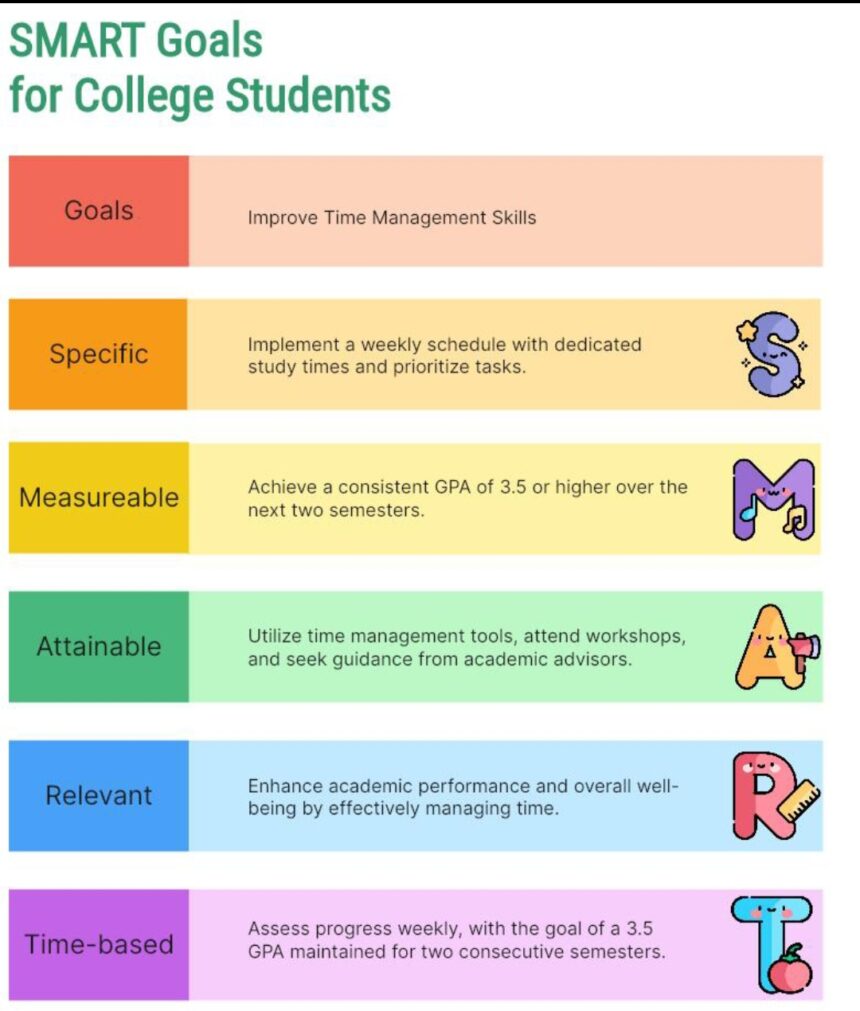
The word SMART stands for:
- S – Specific: Clearly define what you want to achieve.
- M – Measurable: Include a way to track your progress.
- A – Achievable: Set a goal that is realistic based on your abilities and resources.
- R – Relevant: Choose a goal that supports your academic, personal, or career objectives.
- T – Time-bound: Set a deadline to complete your goal.
Example of a SMART Goal
Instead of writing:
❌ “I want to study more.”
Write:
✅ “I will study for two hours every weekday for the next three months to improve my semester grades.”
This goal is specific, measurable, achievable, relevant, and has a clear deadline.
Using the SMART framework makes it easier to stay motivated and achieve meaningful results. That’s why many students use it to plan their academic, financial, and personal goals.
Why Are SMART Goals Important for College Students?
Setting goals is helpful, but setting SMART goals makes it much easier to achieve success. The SMART goals examples for students in college in this guide show how a clear plan can improve your academic performance, personal development, and future career.
Here are some reasons why SMART goals are important:
- Provide Clear Direction
SMART goals tell you exactly what you need to achieve instead of leaving your plans vague or uncertain.
- Improve Focus
When you have a specific goal, it’s easier to concentrate on tasks that support your success and avoid distractions.
- Increase Motivation
Seeing your progress over time keeps you motivated and encourages you to continue working toward your goals.
- Make Progress Easy to Measure
Because SMART goals are measurable, you can track your achievements and identify areas where you need to improve.
- Improve Time Management
Deadlines help you organize your schedule and complete important tasks on time.
- Build Confidence
Achieving small SMART goals gives you confidence to take on bigger academic, financial, and career challenges.
- Prepare You for Future Success
The habit of setting SMART goals is valuable not only in college but also in your professional and personal life.
By following the SMART framework, college students can make better decisions, stay organized, and steadily work toward long-term success.
25 SMART Goals Examples for Students in College
Here are practical SMART goals examples for students in college that can help you improve your academic performance, personal development, finances, health, and career. Each goal is clear, measurable, and has a deadline.
Academic Goals
- Improve Your GPA
Increase your GPA from 7.5 to 8.5 by the end of the semester by studying two hours every weekday.
- Attend Every Class
Maintain at least 95% attendance throughout the semester.
- Complete Assignments Early
Submit every assignment at least two days before the deadline.
- Read One Educational Book Every Month
Finish one book related to your subject or career each month for the next year.
- Improve English Communication
Practice speaking English for 30 minutes daily over the next six months.
Personal Development Goals
- Exercise Regularly
Work out for 30 minutes at least five days a week for the next three months.
- Improve Time Management
Use a planner every day and complete your top three priorities before going to bed.
- Learn a New Skill
Complete an online course in graphic design, coding, digital marketing, or another useful skill within three months.
- Reduce Screen Time
Limit recreational social media use to one hour per day for the next month.
- Read 12 Books in a Year
Read one book every month to improve your knowledge and personal growth.
Career Goals
- Get an Internship
Apply to 10 internship opportunities every month until you receive an offer related to your field of study.
- Build a Professional Resume
Create or update your resume and portfolio before the end of this month.
- Grow Your Professional Network
Connect with two new professionals each week through networking events or professional platforms.
- Earn an Industry Certification
Complete a professional certification within the next six months to improve your job opportunities.
- Improve Interview Skills
Practice mock interviews for 30 minutes every week over the next two months.
Financial Goals
- Save Money Every Month
Save 20% of your monthly income or allowance for the next 12 months.
- Create a Monthly Budget
Track your income and expenses every month to stay within your planned budget.
- Build an Emergency Fund
Save enough money to cover three months of essential expenses within the next two years.
- Avoid Unnecessary Spending
Reduce impulse purchases by following the 24-hour rule before buying non-essential items.
- Learn Basic Investing
Spend 30 minutes each week learning about investing, mutual funds, stocks, or personal finance for the next three months.
These SMART goals examples for students in college can help you build better habits, stay organized, and prepare for academic and career success.
Personal Success Goals
- Volunteer in Community Service
Participate in at least one volunteer activity every three months to develop leadership, teamwork, and social responsibility.
- Improve Public Speaking Skills
Attend a public speaking workshop or give one presentation every month to build confidence.
- Build Healthy Sleep Habits
Sleep for 7–8 hours every night for the next three months to improve focus and overall well-being.
- Practice Stress Management
Spend 15 minutes every day practicing meditation, deep breathing, or mindfulness for the next two months.
- Maintain a Balanced Lifestyle
Create a weekly schedule that includes time for studying, exercise, hobbies, family, and relaxation, and follow it consistently throughout the semester.
These SMART goals examples for students in college show that success isn’t limited to academics. Setting goals in different areas of life helps you become a well-rounded, confident, and responsible individual.
How to Create Your Own SMART Goals
After reviewing these SMART goals examples for students in college, you can start creating goals that fit your own needs and ambitions.
- Identify Your Goal
Decide what you want to achieve. It could be related to academics, career, health, finances, or personal development.
- Make It Specific
Clearly define your goal instead of using vague statements.
Example:
❌ I want better grades.
✅ I want to score above 85% in my semester exams.
- Make It Measurable
Choose a way to track your progress. This helps you know whether you’re moving closer to your goal.
- Keep It Achievable
Set goals that challenge you but are still realistic based on your available time, skills, and resources.
- Make It Relevant
Your goal should support your long-term education, career, or personal growth.
- Set a Deadline
Give yourself a realistic time frame to complete your goal. Deadlines help you stay focused and avoid procrastination.
Following these steps will help you create meaningful SMART goals and stay motivated throughout your college journey.
Common Mistakes to Avoid When Setting SMART Goals
Even though the SMART framework is simple, students often make mistakes that make their goals difficult to achieve. Avoiding these mistakes will help you get better results from your goal-setting process.
- Setting Vague Goals
Goals such as “I want to be successful” or “I want to study more” are difficult to measure. Be as specific as possible.
- Setting Unrealistic Expectations
Choosing goals that are too difficult within a short period can lead to frustration. Set goals that challenge you while remaining achievable.
- Forgetting to Set Deadlines
Without a deadline, it’s easy to postpone your work. Every SMART goal should have a clear completion date.
- Not Tracking Progress
Review your goals regularly to see whether you’re making progress. Tracking helps you stay motivated and identify areas for improvement.
- Trying to Achieve Too Many Goals
Focusing on too many goals at the same time can reduce your productivity. Start with a few important goals and add more after completing them.
- Giving Up After a Setback
Challenges and failures are a normal part of learning. Instead of quitting, adjust your plan and continue working toward your goal.
- Not Reviewing Goals Regularly
Your priorities may change over time. Review your SMART goals every month or every semester and update them when necessary.
Avoiding these common mistakes will help you stay focused, manage your time effectively, and achieve your academic, personal, and career goals more successfully.
Frequently Asked Questions (FAQs)
- What are SMART goals for college students?
SMART goals are goals that are Specific, Measurable, Achievable, Relevant, and Time-bound. They help college students create a clear plan and track their progress toward academic, career, financial, and personal goals.
- Why are SMART goals important for students?
SMART goals improve focus, increase motivation, help students manage their time effectively, and make it easier to measure progress and achieve long-term success.
Some practical SMART goals examples for students in college include:
- Improve your GPA by the end of the semester.
- Save 20% of your monthly allowance.
- Complete an online certification within three months.
- Exercise five days a week.
- Apply for 10 internships every month.
- How often should I review my SMART goals?
Review your SMART goals at least once a month. Regular reviews help you stay on track, celebrate progress, and adjust your goals if needed.
- Can SMART goals be used outside academics?
Yes. SMART goals can be used for career planning, personal development, health, fitness, money management, relationships, and almost any area where you want to achieve measurable results.
Conclusion
Using SMART goals examples for students in college is one of the best ways to stay focused and achieve meaningful success. Instead of setting unclear goals, the SMART framework helps you create realistic plans with measurable results and clear deadlines.
Whether your goal is to improve your grades, build new skills, save money, find an internship, or develop healthier habits, SMART goals can help you make steady progress.
Remember, success doesn’t happen overnight. Small, consistent actions taken every day will bring you closer to your academic, financial, and personal goals.
Start creating your own SMART goals today, stay committed to your plan, and celebrate every milestone along the way.