

Table of Contents
Introduction
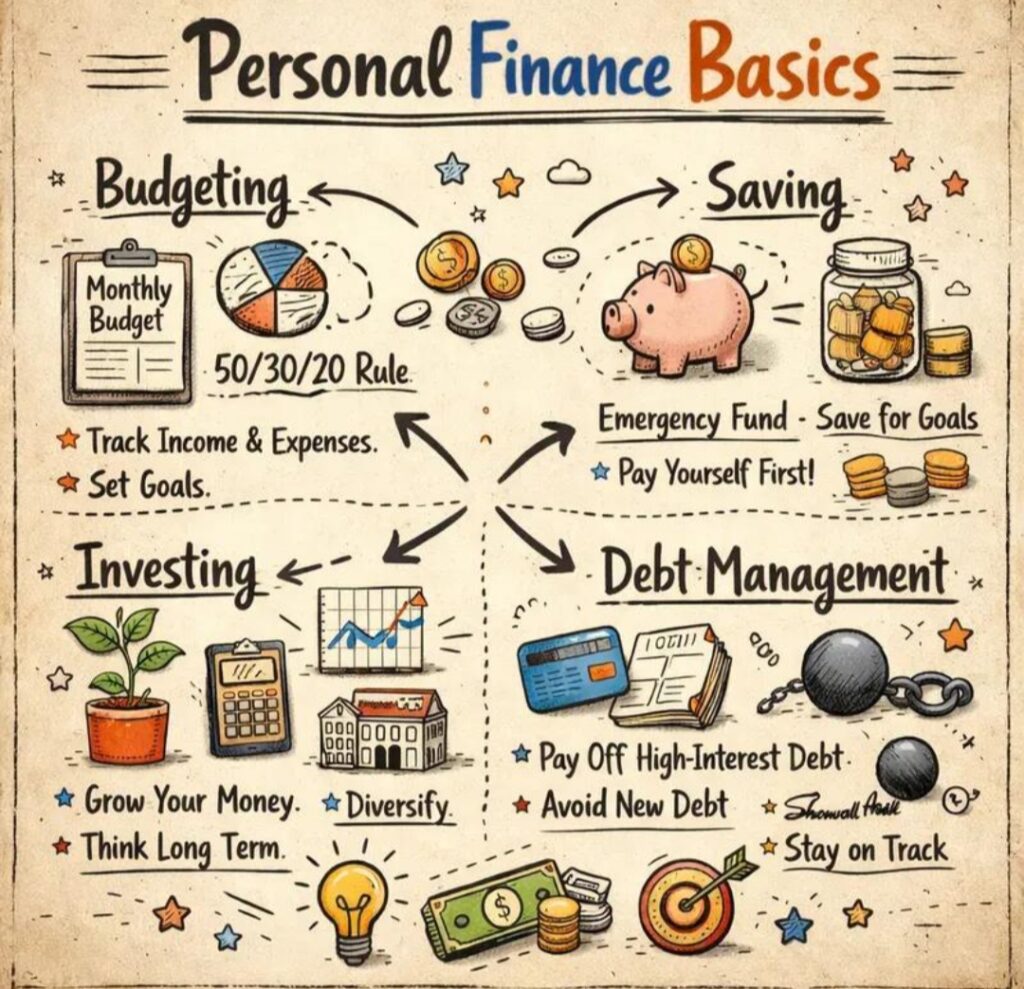
Managing money doesn’t have to be difficult. Whether you’re a student, a young professional, or someone starting your financial journey, learning the finance basics for beginners is the first step toward building a secure financial future.
Many people think finance is only about investing or earning a high income. In reality, finance is about making smart decisions with the money you already have. Understanding how to budget, save, invest, avoid unnecessary debt, and plan for future goaals can improve your financial well-being.
The good news is that you don’t need an accounting or finance degree to understand personal finance. With the right knowledge and consistent habits, anyone can learn to manage money effectively.
In this guide, you’ll learn the most important finance basics for beginners, discover practical money management tips, and build a strong foundation for long-term financial success.
What Is Personal Finance?
Personal finance is the process of managing your money to meet your daily needs and achieve your future financial goals. It includes earning, spending, saving, investing, borrowing, and protecting your money.
Understanding the finance basics for beginners means learning how to make smart financial decisions instead of simply earning more money. Good personal finance habits help you avoid financial stress and prepare for unexpected situations.
The main areas of personal finance include:
- Budgeting
Planning how you will spend and save your income each month.
- Saving
Setting aside money for emergencies, short-term goals, and future needs.
- Investing
Growing your money over time through investments such as mutual funds, stocks, or other suitable financial products.
- Debt Management
Using loans and credit responsibly while avoiding unnecessary debt.
- Insurance
Protecting yourself and your family from financial risks caused by accidents, illness, or other unexpected events.
- Financial Planning
Setting short-term and long-term financial goals and creating a strategy to achieve them.
Learning these basic concepts provides a strong foundation for making better financial decisions throughout your life.
Why Is Financial Literacy Important?
Financial literacy is the ability to understand and manage money effectively. Learning the finance basics for beginners helps you make informed financial decisions and avoid common money mistakes.
Here are some reasons why financial literacy is important:
- Helps You Manage Money Wisely
Understanding budgeting and saving helps you control your spending and make better financial choices.
- Reduces Financial Stress
Having a financial plan and emergency savings can make it easier to handle unexpected expenses.
- Encourages Better Saving Habits
Financial literacy teaches you to save regularly instead of spending all your income.
- Helps You Avoid Debt Problems
Knowing how loans, interest rates, and credit work can prevent unnecessary borrowing and financial difficulties.
- Supports Long-Term Wealth Building
Learning about investing and financial planning allows your money to grow over time and helps you achieve future goals.
- Improves Financial Confidence
When you understand how money works, you feel more confident making decisions about saving, investing, insurance, and retirement planning.
- Prepares You for Major Life Goals
Financial literacy helps you plan for important milestones such as higher education, buying a home, starting a business, or retiring comfortably.
Developing financial literacy early makes it easier to build healthy money habits that can benefit you throughout your life.
10 Finance Basics Every Beginner Should Know
If you’re just starting your financial journey, these finance basics for beginners will help you build a strong foundation and make smarter money decisions.
- Create a Monthly Budget
A budget helps you understand how much money you earn, spend, and save each month. Tracking your finances makes it easier to avoid overspending.
- Build an Emergency Fund
Save enough money to cover 3–6 months of essential expenses. An emergency fund protects you during unexpected situations like medical emergencies or job loss.
- Save Before You Spend
Develop the habit of saving a portion of your income before spending the rest. Even small monthly savings can grow significantly over time.
- Understand the Difference Between Needs and Wants
Spend your money on essential needs first, such as food, housing, and education. Limit spending on non-essential wants whenever possible.
- Learn About Compound Interest
Compound interest allows your savings and investments to grow because you earn returns on both your original investment and previous earnings.
- Start Investing Early
The earlier you begin investing, the more time your money has to grow. Beginners can start by learning about diversified investment options and investing regularly according to their goals.
- Avoid High-Interest Debt
Be careful with credit cards and personal loans. Paying off high-interest debt quickly can save you a significant amount of money over time.
- Protect Yourself with Insurance
Health and life insurance can help protect your finances from unexpected events and reduce financial risks.
- Set Financial Goals
Create both short-term and long-term financial goals. Clear goals help you stay motivated and make better financial decisions.
- Keep Learning About Money
Personal finance is a lifelong skill. Read books, follow trusted financial resources, and continue improving your financial knowledge as your needs change.
Mastering these finance basics for beginners will help you build healthy financial habits and create a strong foundation for long-term financial success.
How to Start Managing Your Money
Learning the finance basics for beginners is only the first step. The next step is putting that knowledge into practice. You don’t need a high income to manage your money well—good financial habits matter more than how much you earn.
Step 1: Track Your Income and Expenses
Write down all the money you receive and every expense you make. This helps you understand where your money is going and identify unnecessary spending.
Step 2: Create a Budget
Plan how you’ll divide your income between essential expenses, savings, investments, and personal spending. A budget helps you stay in control of your finances.
Step 3: Save Regularly
Make saving a monthly habit. Even if you can only save a small amount, consistency is more important than the amount itself.
Step 4: Pay Off High-Interest Debt
If you have credit card debt or high-interest loans, focus on paying them off as soon as possible. This frees up more money for saving and investing.
Step 5: Start Investing
Once you’ve built an emergency fund, begin investing according to your financial goals and risk tolerance. Investing early gives your money more time to grow.
Step 6: Protect Your Finances
Consider appropriate insurance coverage to protect yourself and your family from unexpected financial risks.
Step 7: Review Your Financial Plan
Review your budget, savings, and investments regularly. Update your financial plan whenever your income, expenses, or goals change.
By following these simple steps, beginners can build strong money management habits and create a secure financial future.
Common Finance Mistakes Beginners Should Avoid
Everyone makes financial mistakes at some point, especially when they’re just starting out. Understanding these common mistakes can help you apply the finance basics for beginners more effectively and build stronger financial habits.
- Living Beyond Your Means
Spending more than you earn can quickly lead to debt and financial stress. Always try to live within your budget.
- Not Having a Budget
Without a budget, it’s difficult to know where your money goes. A monthly budget helps you control spending and save consistently.
- Ignoring Emergency Savings
Unexpected expenses can happen at any time. Without an emergency fund, you may have to rely on loans or credit cards.
- Delaying Investments
Many beginners wait until they earn more money before investing. Starting early, even with small amounts, gives your investments more time to grow.
- Taking Unnecessary Debt
Borrow only when necessary. High-interest debt can reduce your ability to save and invest.
- Not Learning About Personal Finance
Financial education is an ongoing process. Continue reading books, following trusted financial resources, and improving your money management skills.
- Failing to Review Financial Goals
Your financial situation will change over time. Review your goals regularly and adjust your budget, savings, and investment plans when needed.
Avoiding these common mistakes will help you build a stronger financial foundation and make better money decisions throughout your life.
Frequently Asked Questions (FAQs)
- What are the finance basics for beginners?
The finance basics for beginners include budgeting, saving, investing, debt management, insurance, and financial planning. Learning these fundamentals helps you manage money wisely and achieve your financial goals.
- How can beginners start learning about finance?
Beginners can start by reading personal finance books, following trusted financial websites, taking online courses, and practicing budgeting and saving in their daily lives.
- What is the first step in personal finance?
The first step is understanding your income and expenses. Once you know where your money is going, you can create a budget and start saving regularly.
- Should beginners start investing?
Yes. After building an emergency fund and understanding the basics of investing, beginners can start investing according to their financial goals and risk tolerance. Starting early allows more time for long-term growth.
- Why is financial literacy important?
Financial literacy helps people make informed money decisions, avoid unnecessary debt, build wealth, prepare for emergencies, and achieve long-term financial security.
Conclusion
Learning the finance basics for beginners is one of the most valuable investments you can make in yourself. You don’t need to be a financial expert to take control of your money. By understanding budgeting, saving, investing, debt management, insurance, and financial planning, you can build a strong foundation for lifelong financial success.
Start with small, consistent steps. Create a budget, save regularly, avoid unnecessary debt, and continue improving your financial knowledge. Over time, these habits will help you make better financial decisions and achieve your personal and financial goals.
Remember, financial success is not about how much you earn—it’s about how well you manage the money you have.